Case Study:
Pacing at Final Level
This case study demonstrates ownership over pacing and intensity in a narrative-driven FPS mission. The work focused on managing escalation and cooldown to prevent player fatigue while preserving RoboCop’s power fantasy. The gameplay Focus in on gameplay with some narrative constraints.
Context & Design Pillars
Designed the final infantry combat level (approx. 20-25 min) ending with the antagonist's capture.
- Progression: Transition from cornered target to unstoppable force.
- Challenge: Maintain high intensity without fatigue.
- Execution: Utilizing all available enemy types and player's tools and abilities, grouping enemies into interesting combinations
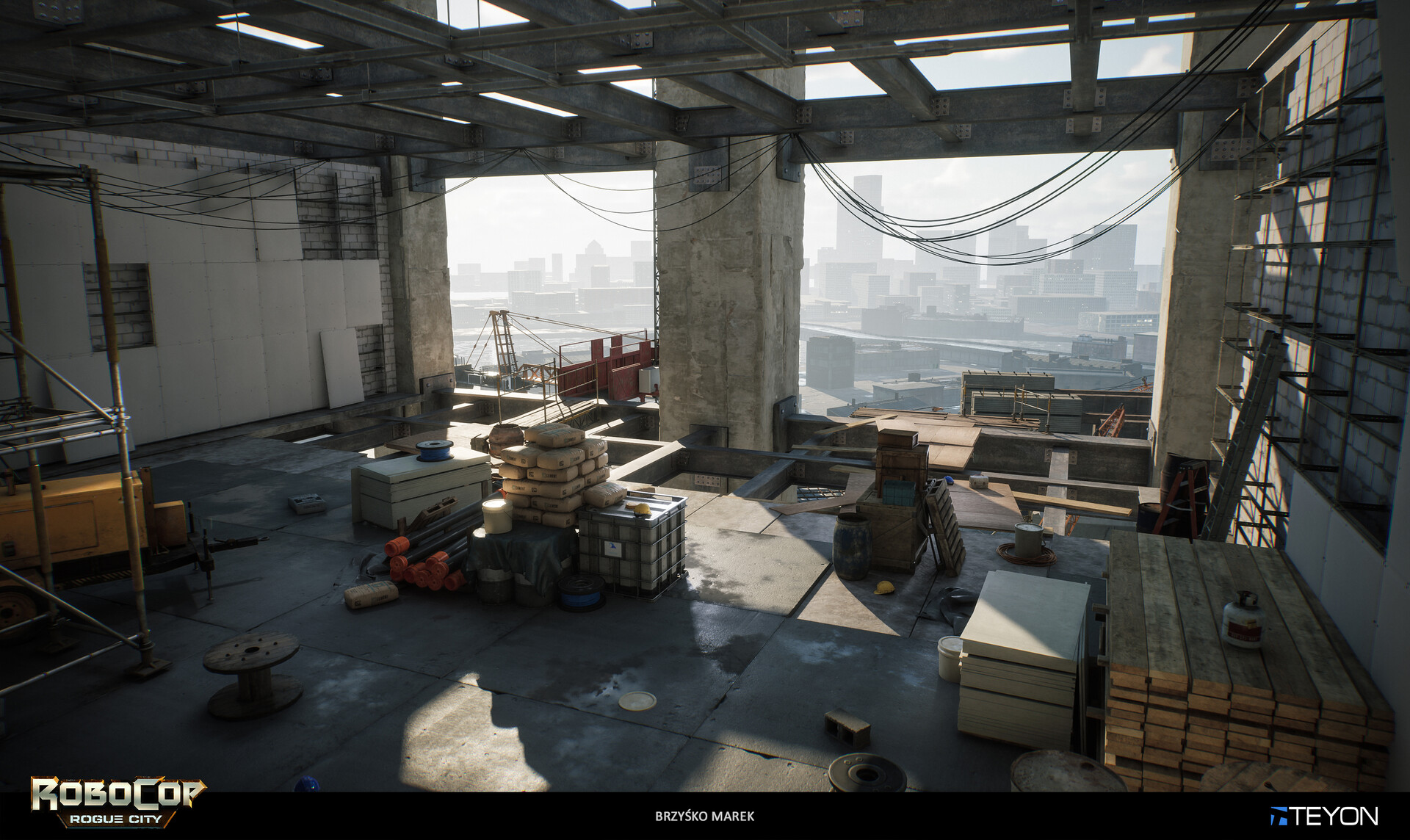
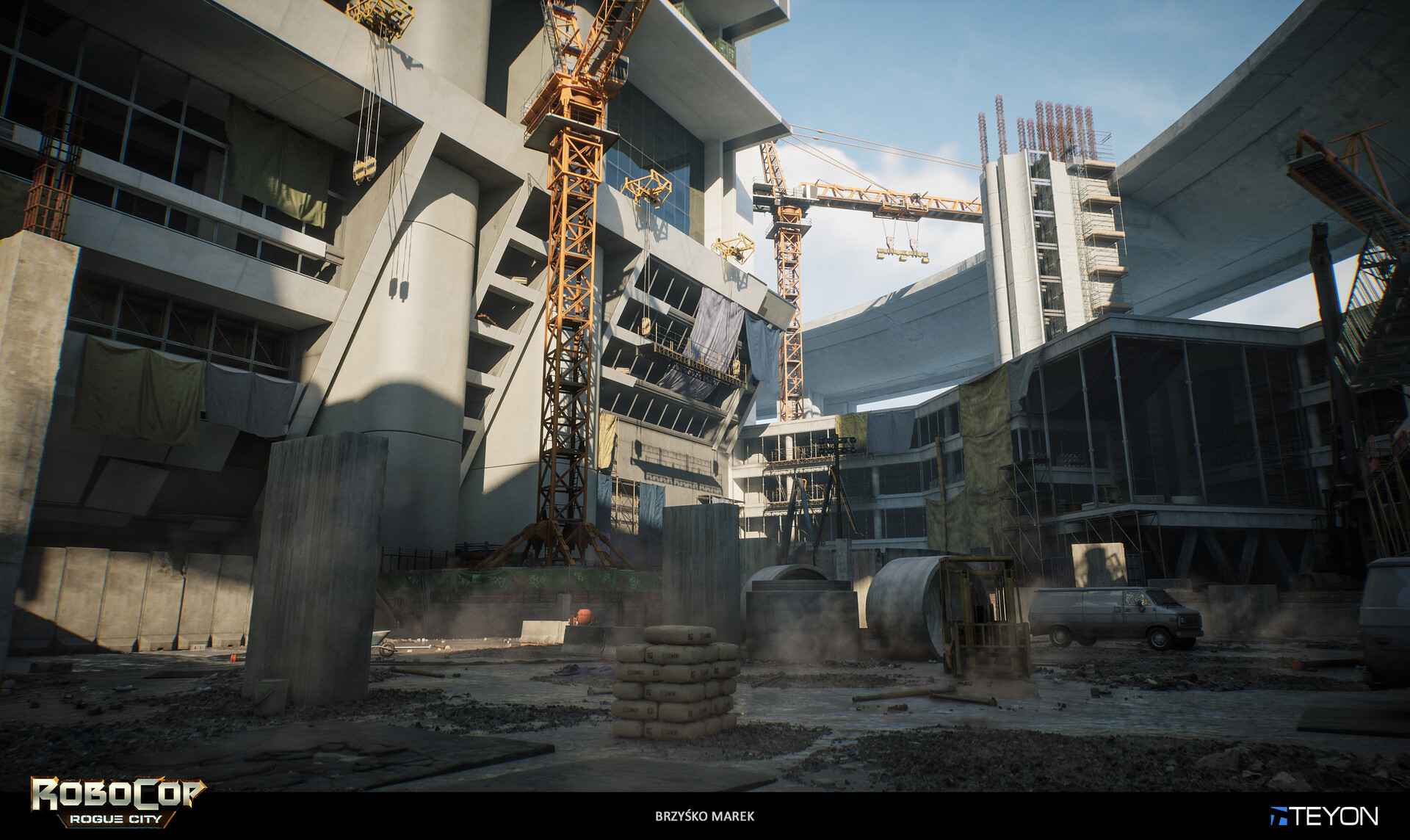
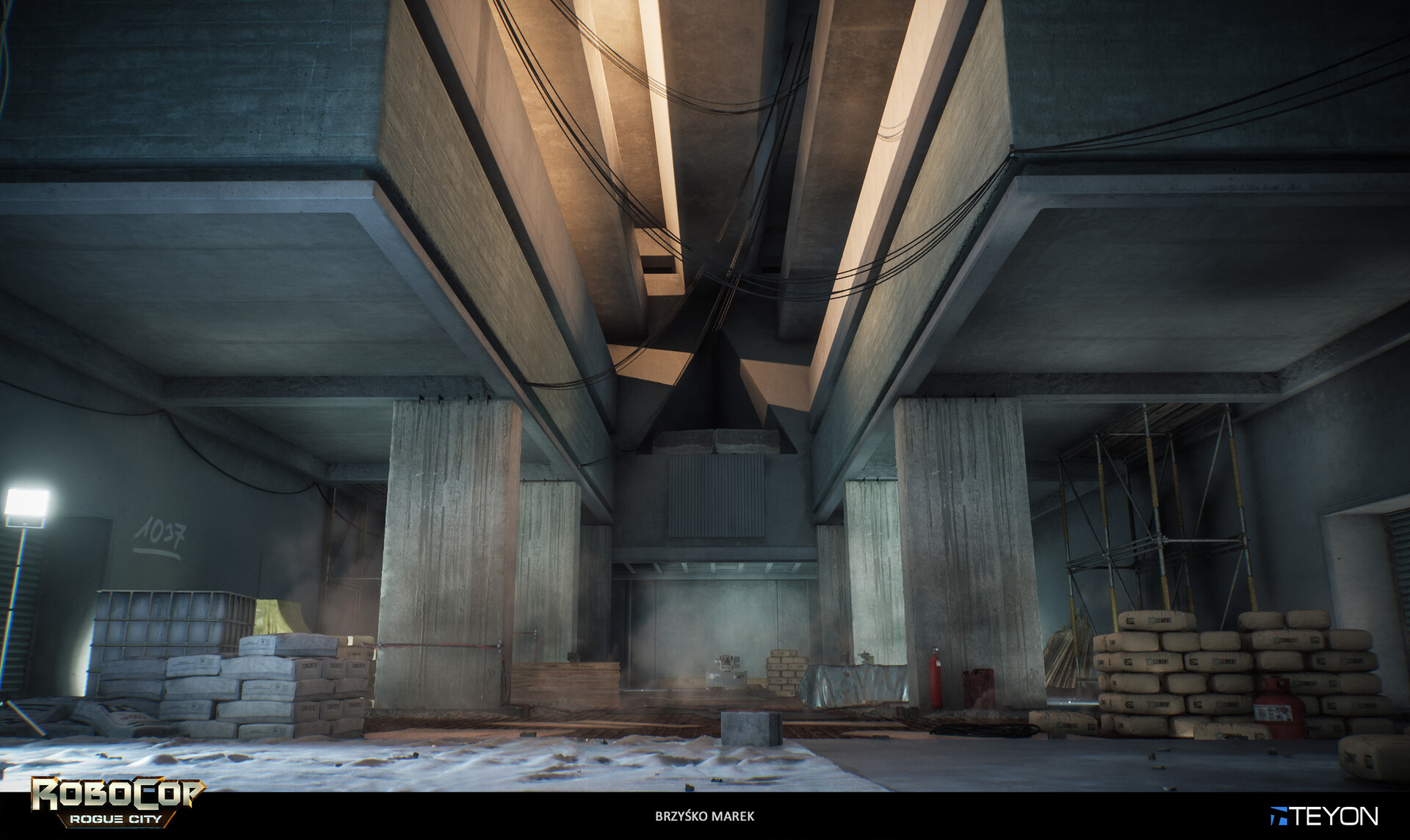
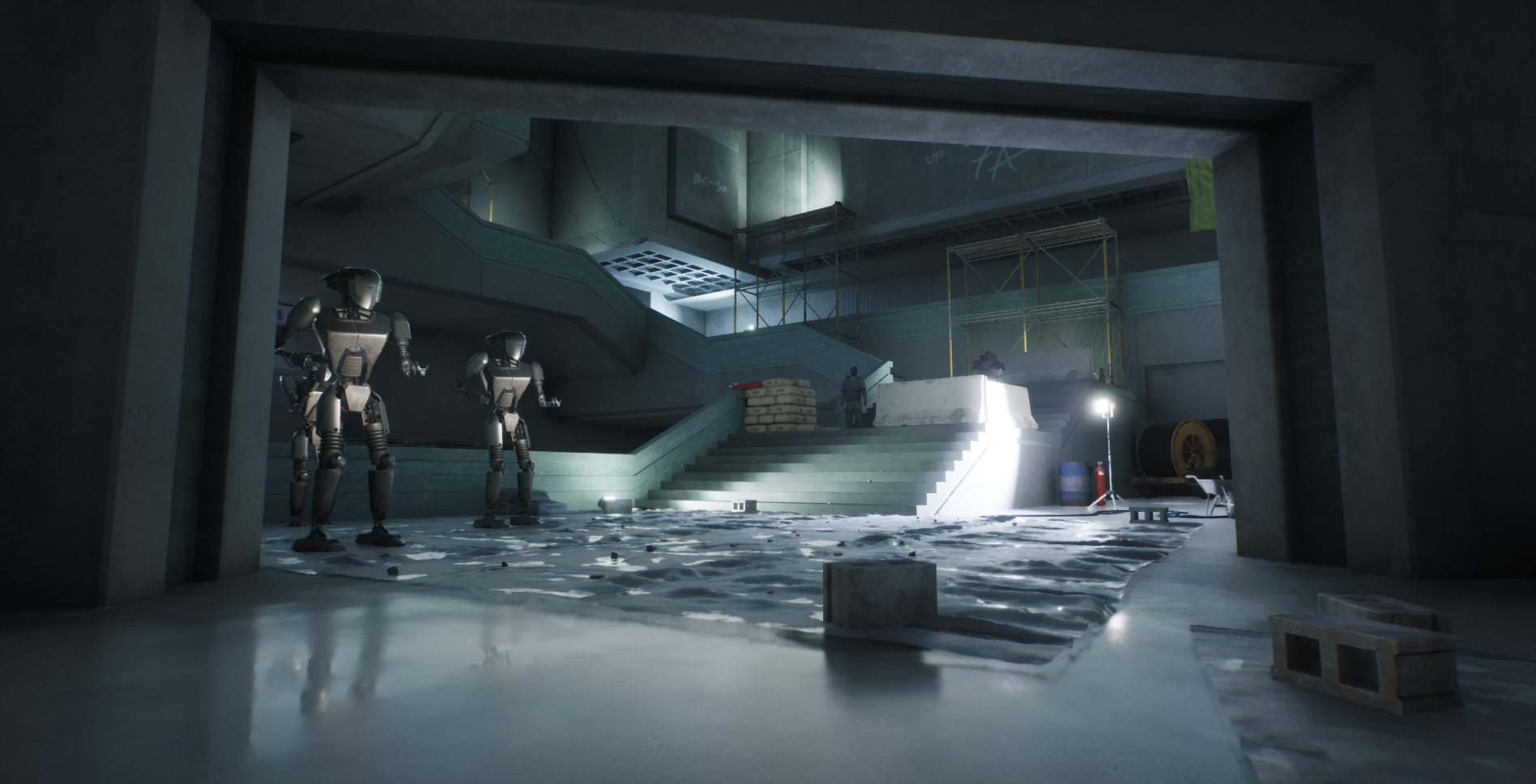
Environment Art & selected screenshots courtesy of the very talented Level Artist, Marek Brzyśko, responsible for the Level Art on my KL
Gameplay Beats & Pacing
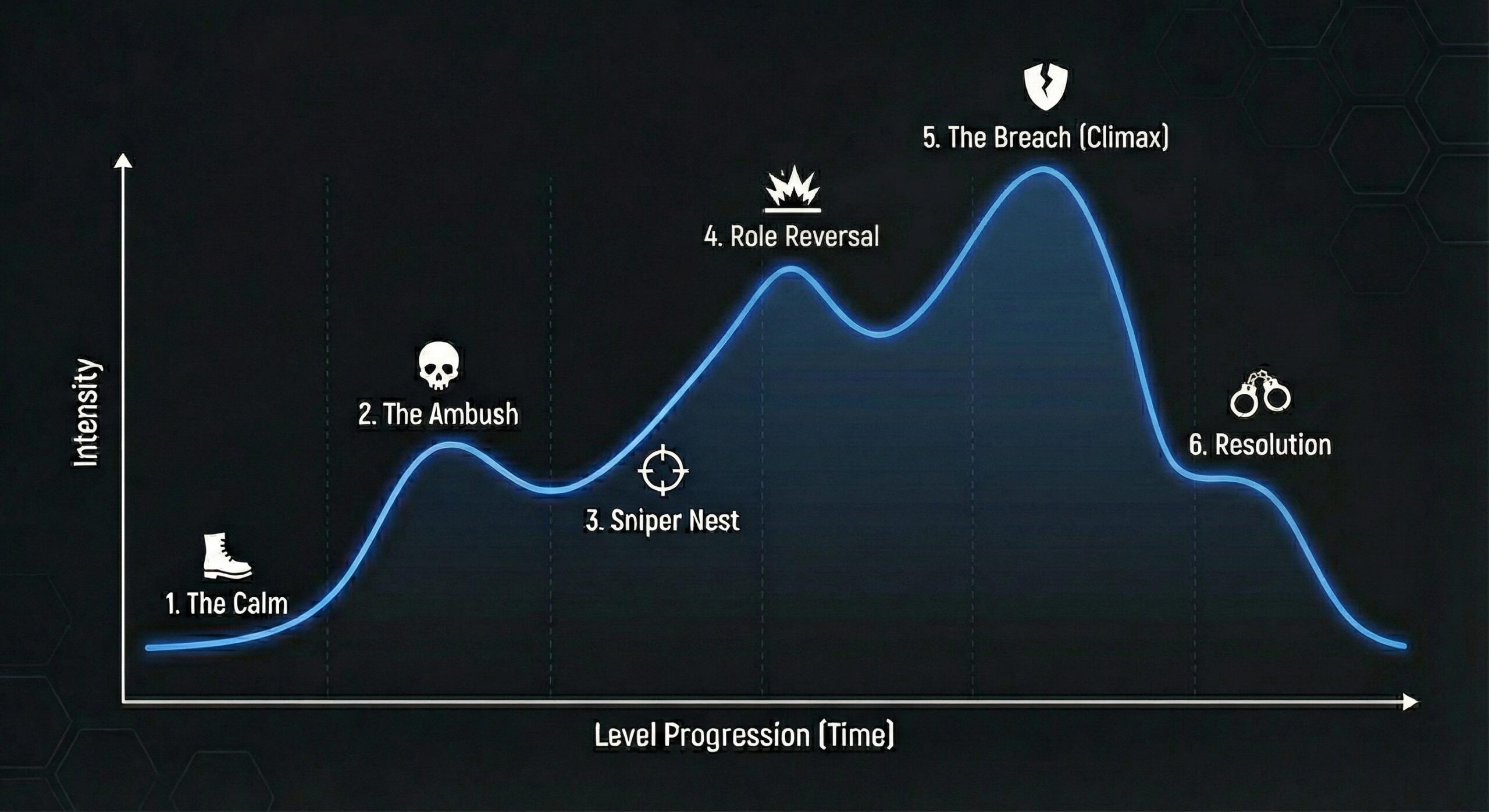
- The Calm (Navigation & Reset)
- The Ambush (Foreshadowing & Trap)
- Sniper Nest (New Mechanic Intro)
- Role Reversal (Power Fantasy)
- The Breach (Climax)
- R.esolution (Capture)
- Te Calm (Pacing Reset)
Before the storm, I needed a reset. Designed a simple navigation section following the target's trail.
- Critical Path: Straightforward navigation.
- Exploration: Optional rewards for explorers.
- Pacing: No side quests to preserve momentum.
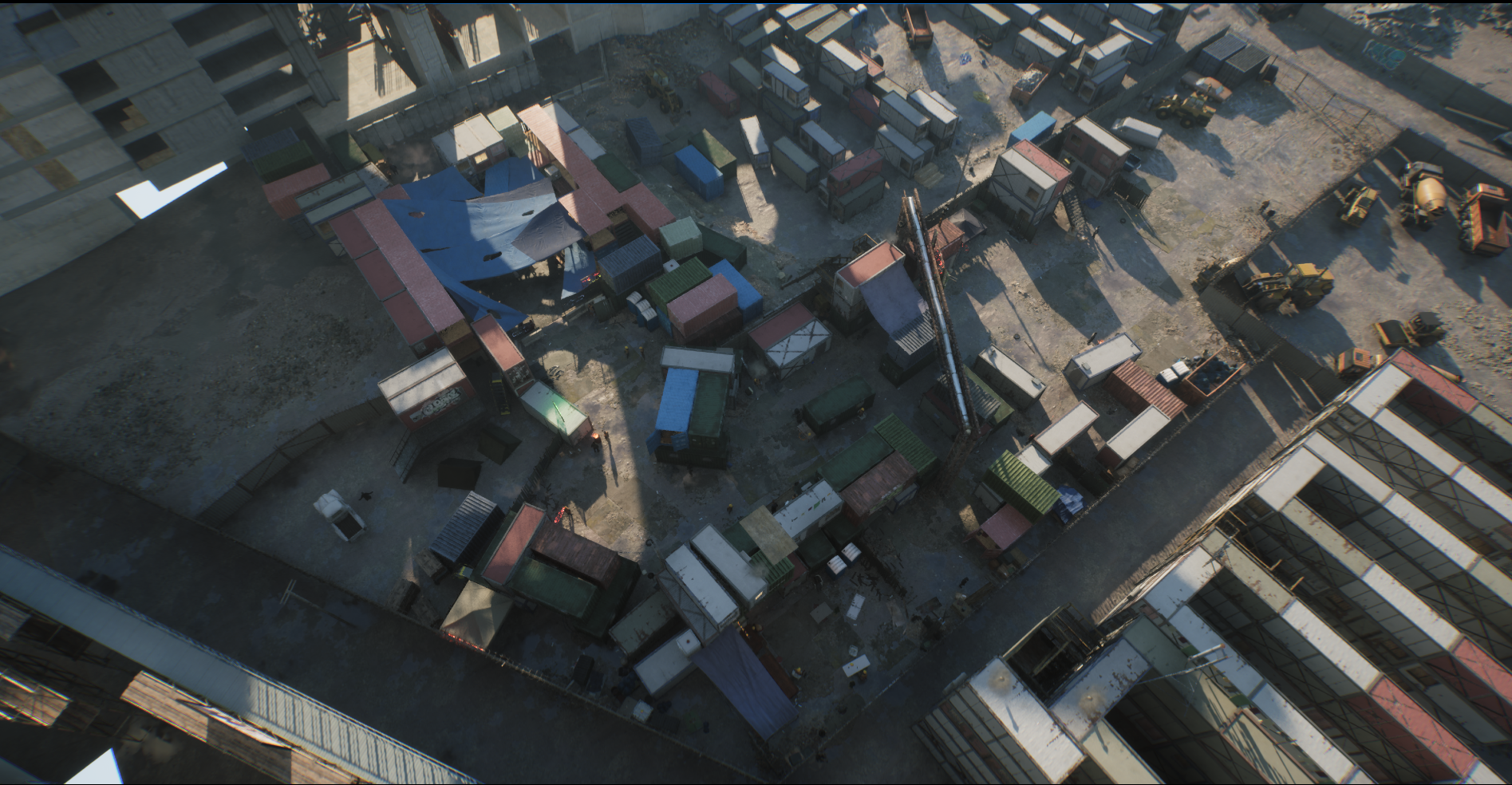
2. The Ambush (Foreshadowing)
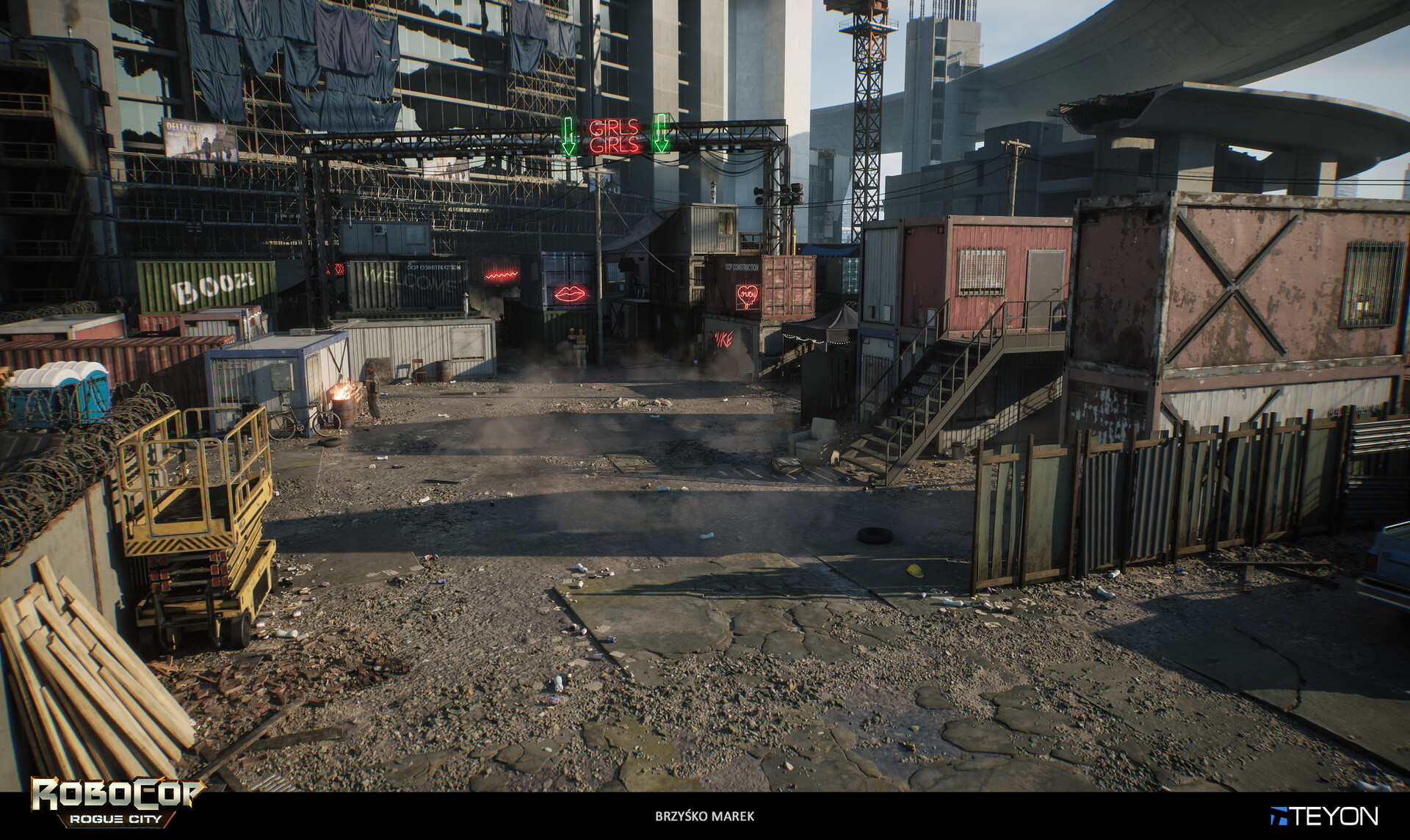
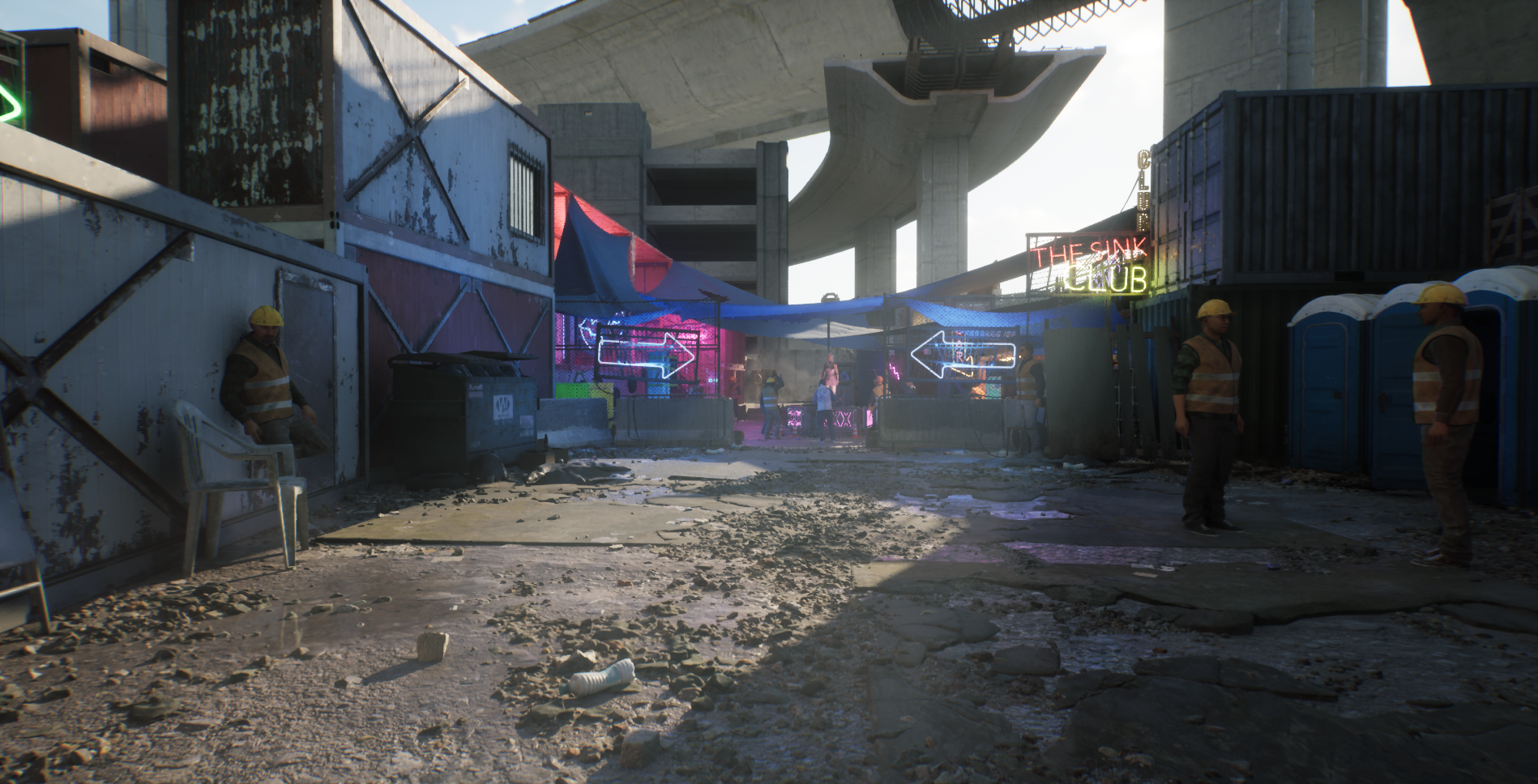
The player drops into an arena, knowing it's a trap (foreshadowed by environment and layout).
- Feeling Cornered: Selected enemies (e.g., in hard-to-reach spots) have lowered HP. This allowed me to simulate an overwhelming ambush while maintaining fairness
- Pacing Control: The ambush is split into stages separated by physical gates to allow breathing room. Overall, the whole location has very carefully designed micro-pacing (break/engagement)
- Geometry Shift: Transitioning from an open arena to a narrow claustrophobic corridor to spike intensity and force gameplay variety.
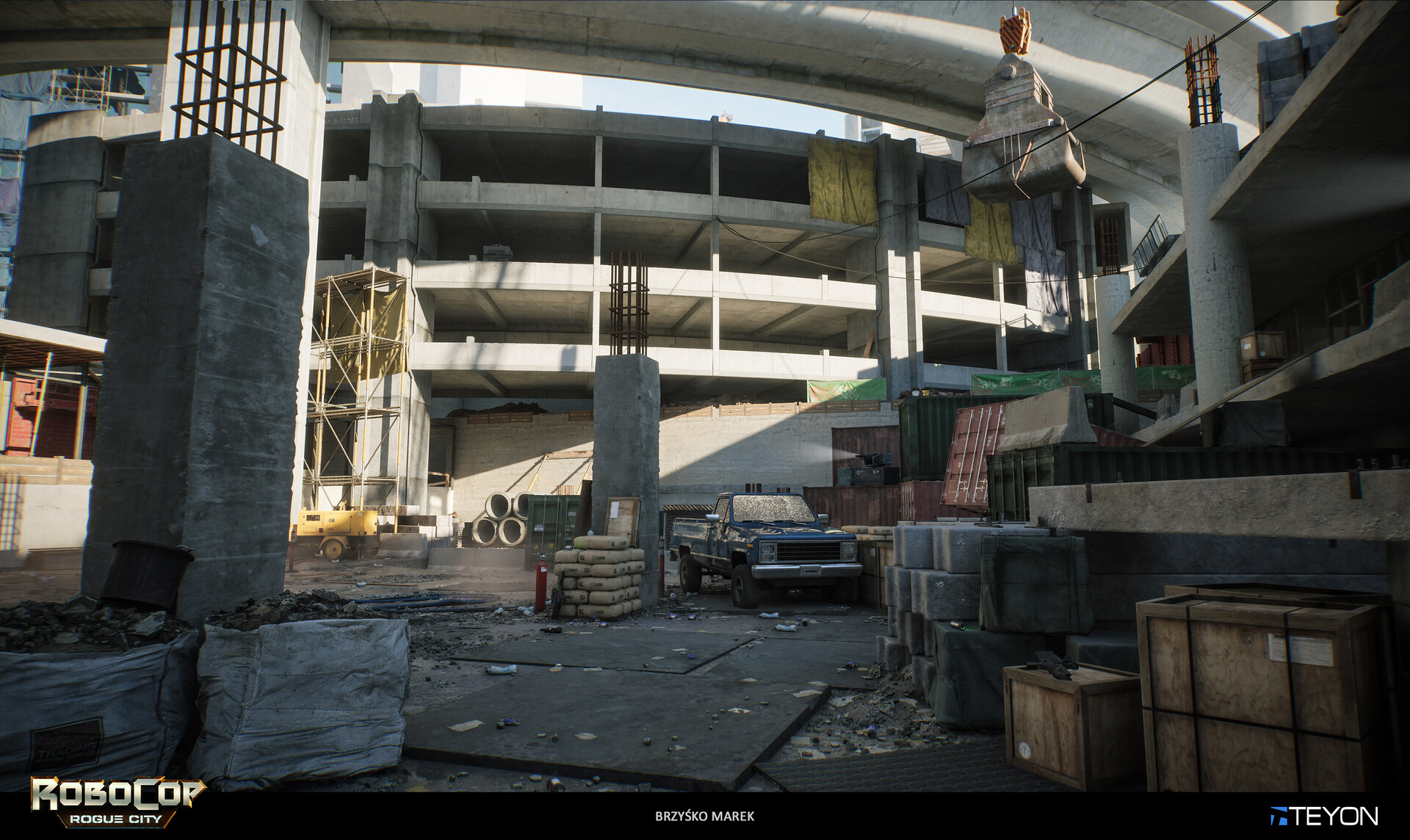
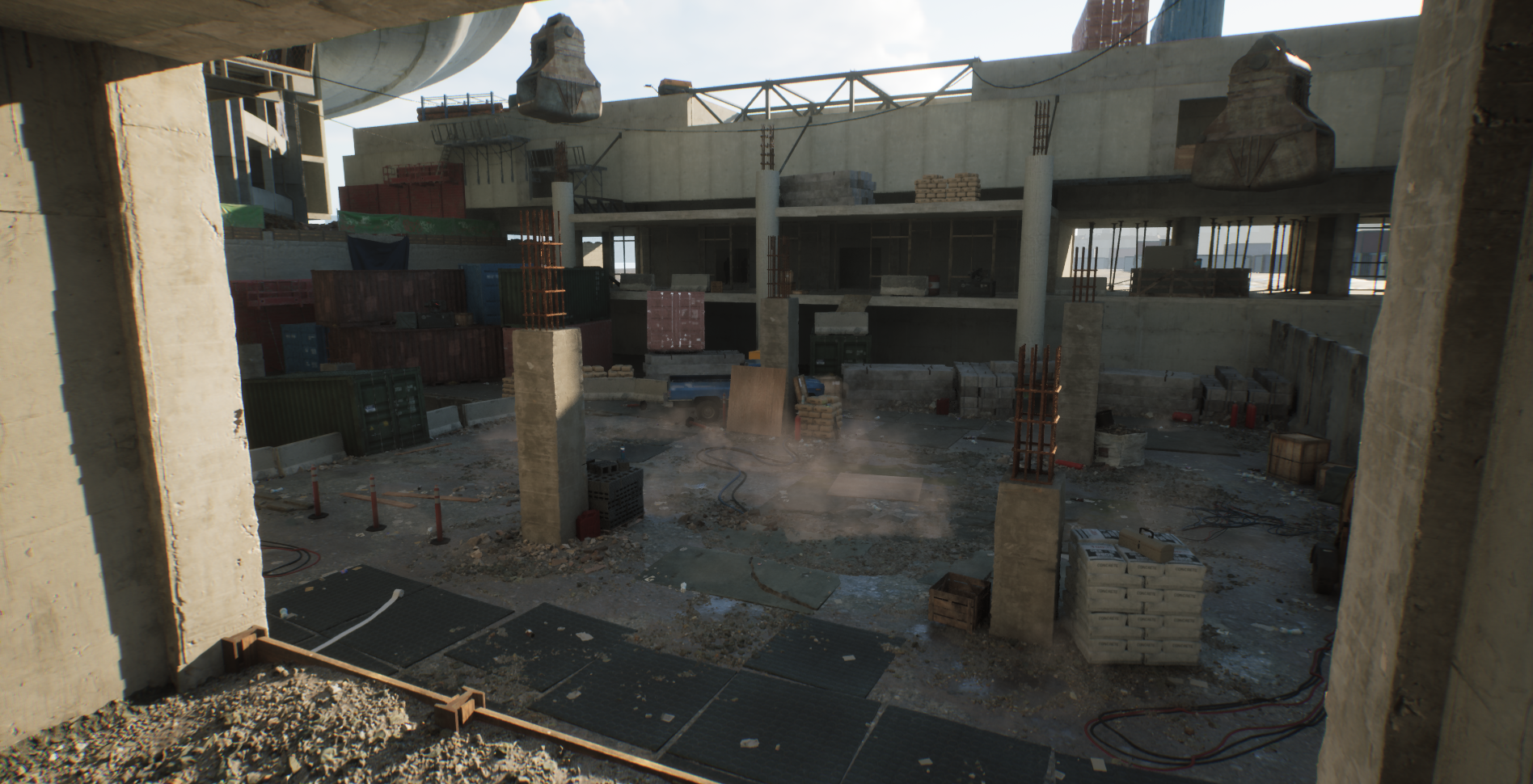
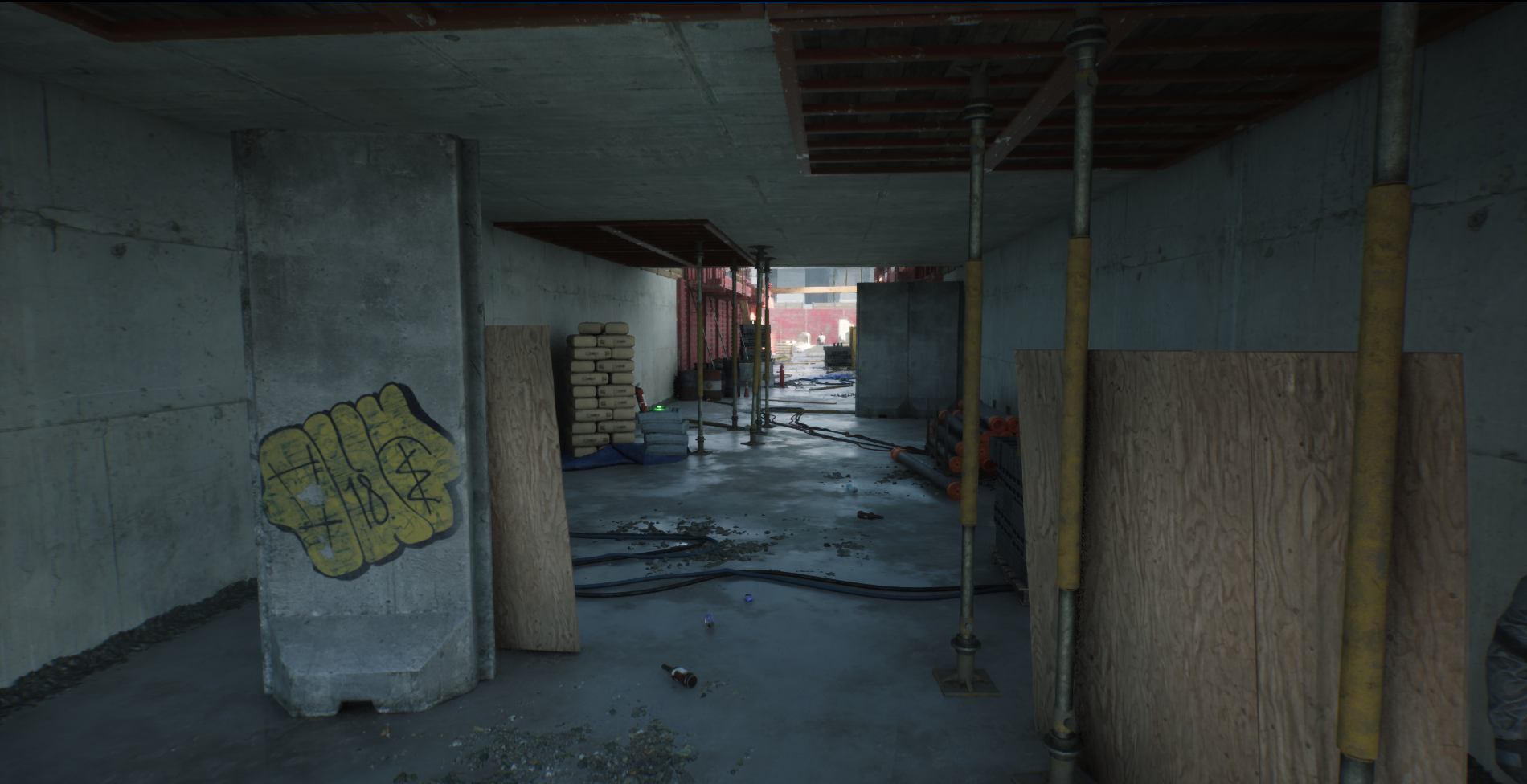
3. Sniper Nest (New Mechanic)
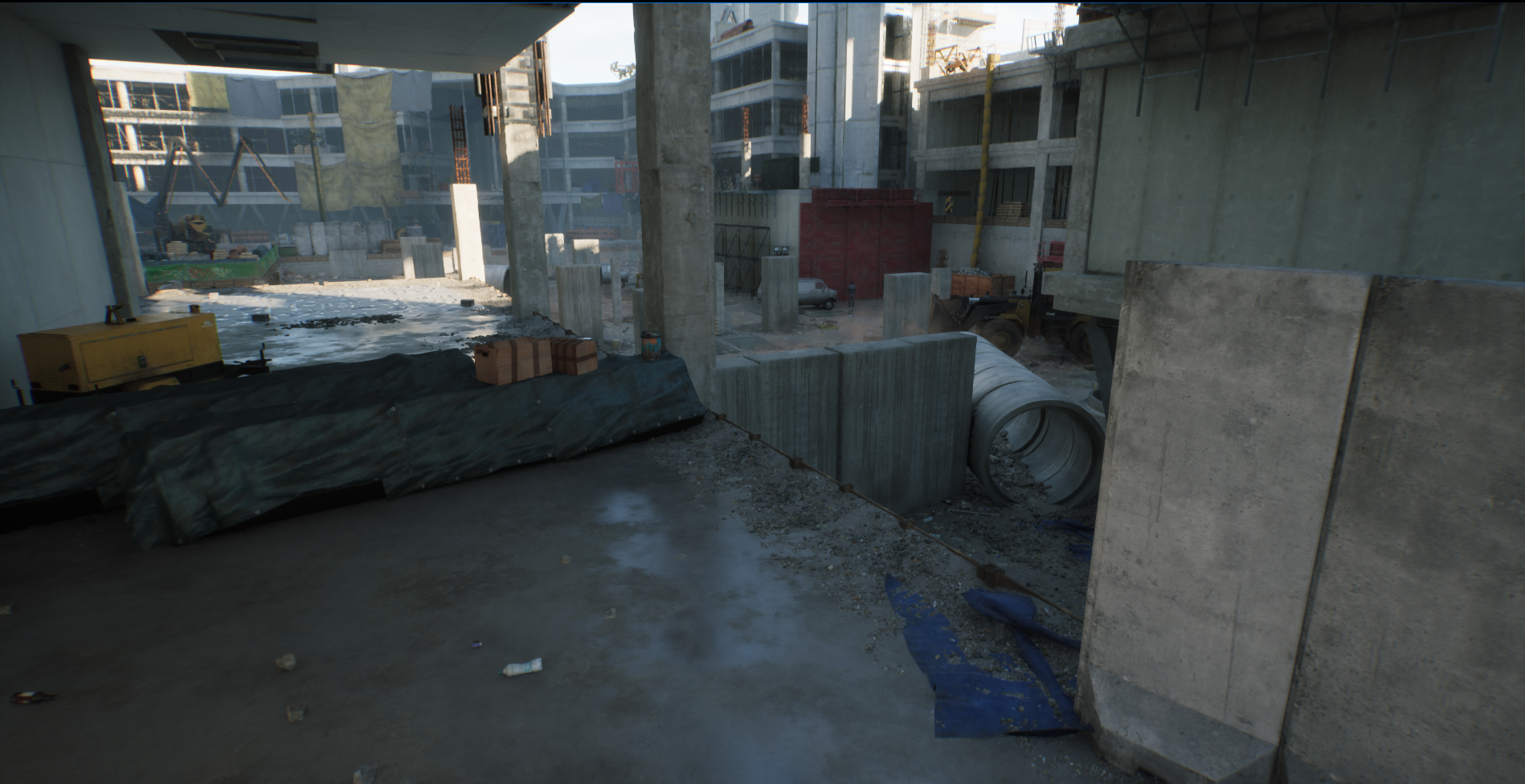
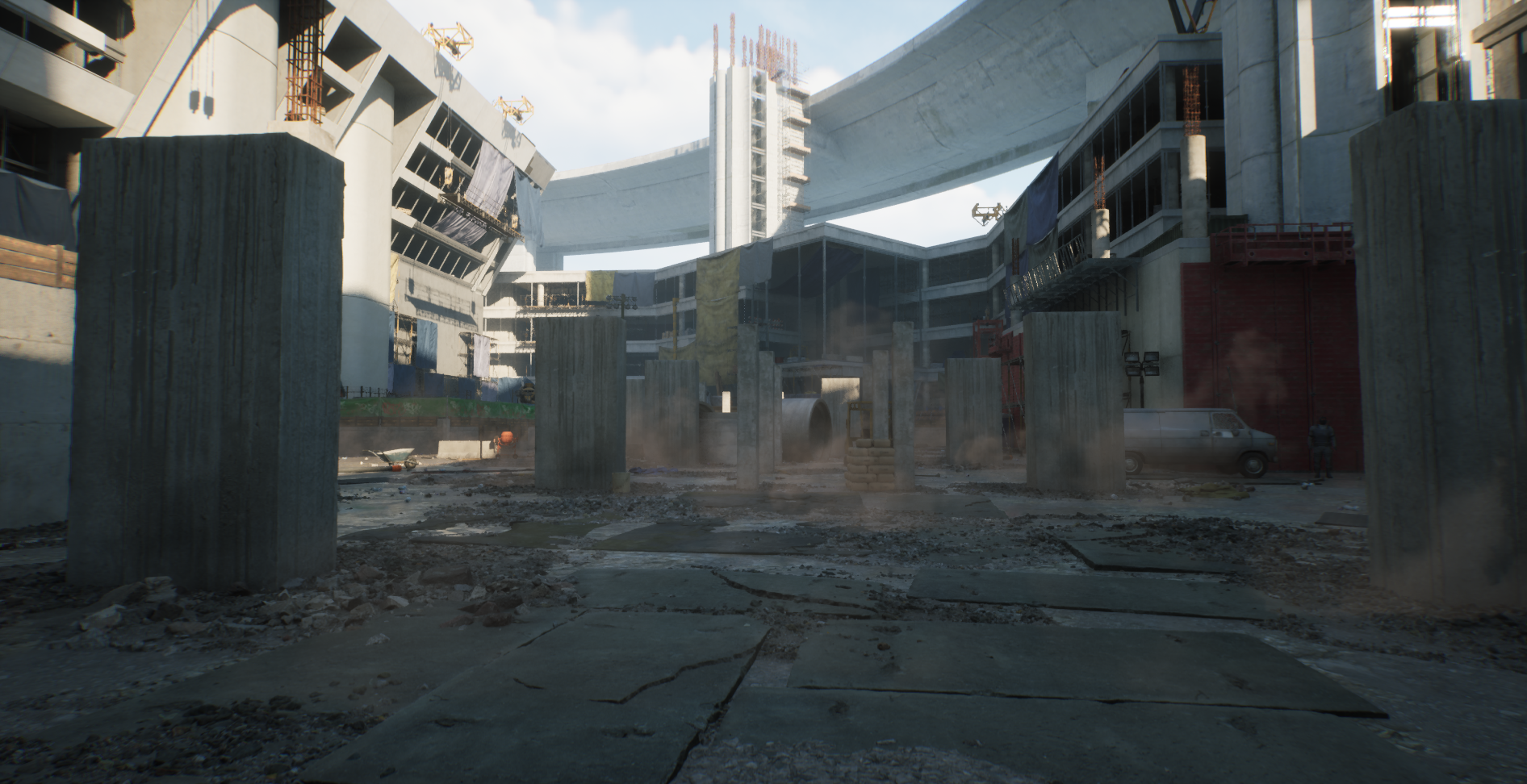
Enemies target RoboCop with explosive rounds. The resulting destruction of cover pushes the player to move forward aggressively and allows him to utilize his special ability of jumping forward: the distance between covers allows him to jump between them.
- Tutorialization: Safe observation zone establishes threat before engagement.
- Mechanic: Explosive rounds deny static playstyles, forcing constant relocation.
4. Role Reversal (The Turning Point)
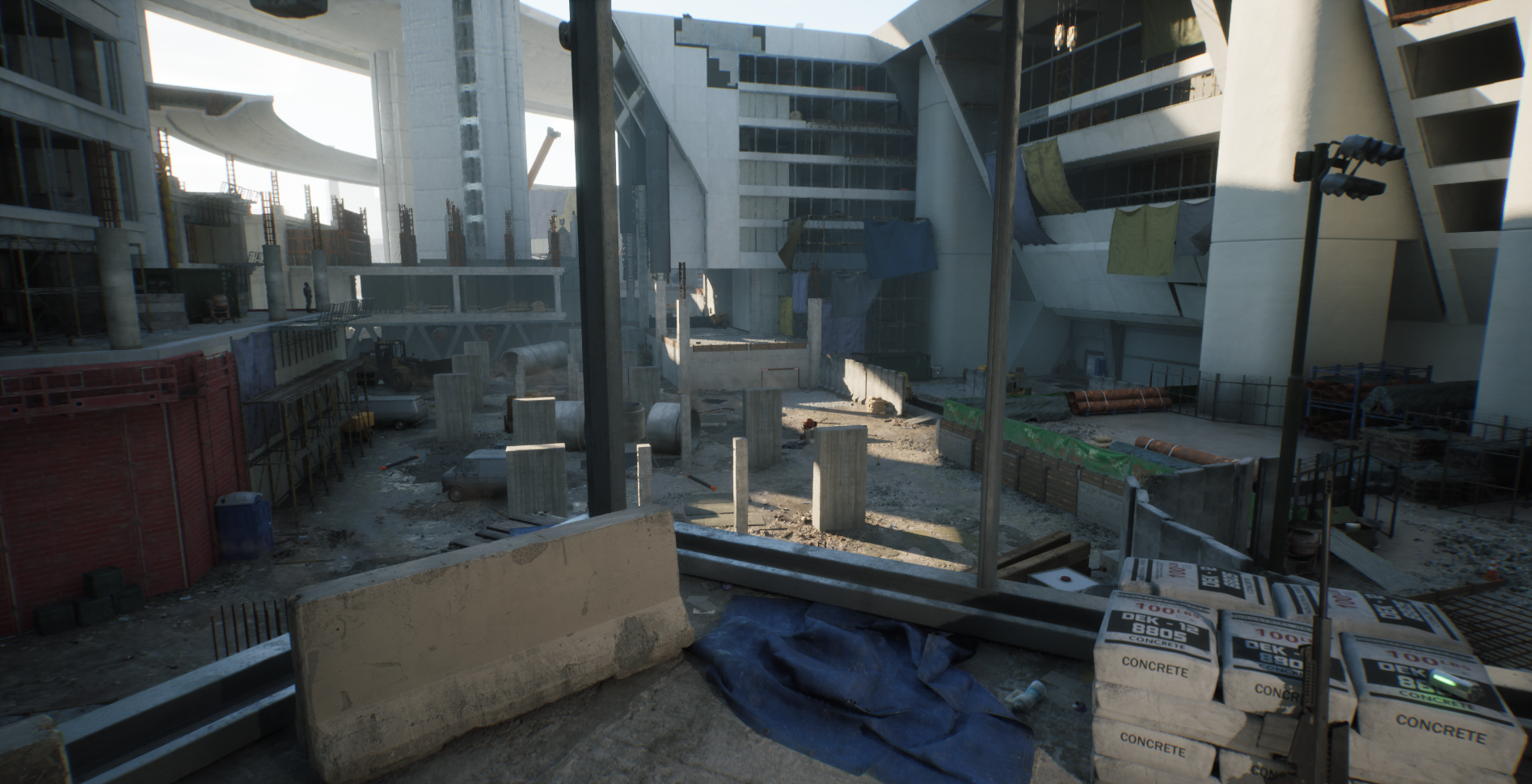
The player acquires the explosive sniper rifle and takes the high ground.
- Power Fantasy: Tight enemy grouping for multi-kills.
- Reuse: Backtracking through the destroyed arena.
5. The Breach (Climax)
Graduating tension towards the finale. Geometry is simplified to reduce navigational friction during high-intensity combat.
- The Mastery Test: I utilized every enemy archetype in various configurations, forcing the player to adapt constantly while providing an abundance of tools to push forward.
- Technical Design: The final fight takes place in a narrow, confined space to increase impact. I scripted a dynamic destruction effect by swapping static meshes with damaged variants during explosions. Scripted mesh swapping simulates structural destruction without physics overhead.
6. Resolution
The level winds down after peak intensity. A linear, low-intensity chase dissipated tension and bridged the combat climax with the narrative capture.
- Release: Chase sequence and capture.